Date Posted : November 25, 2025
by AsphaltPro Magazine
in : News and Events
Source: AsphaltPro Magazine
All Roads Construction expands its Vancouver asphalt plant capacity without missing a shift - balancing growth, environmental performance, and nonstop customer service.
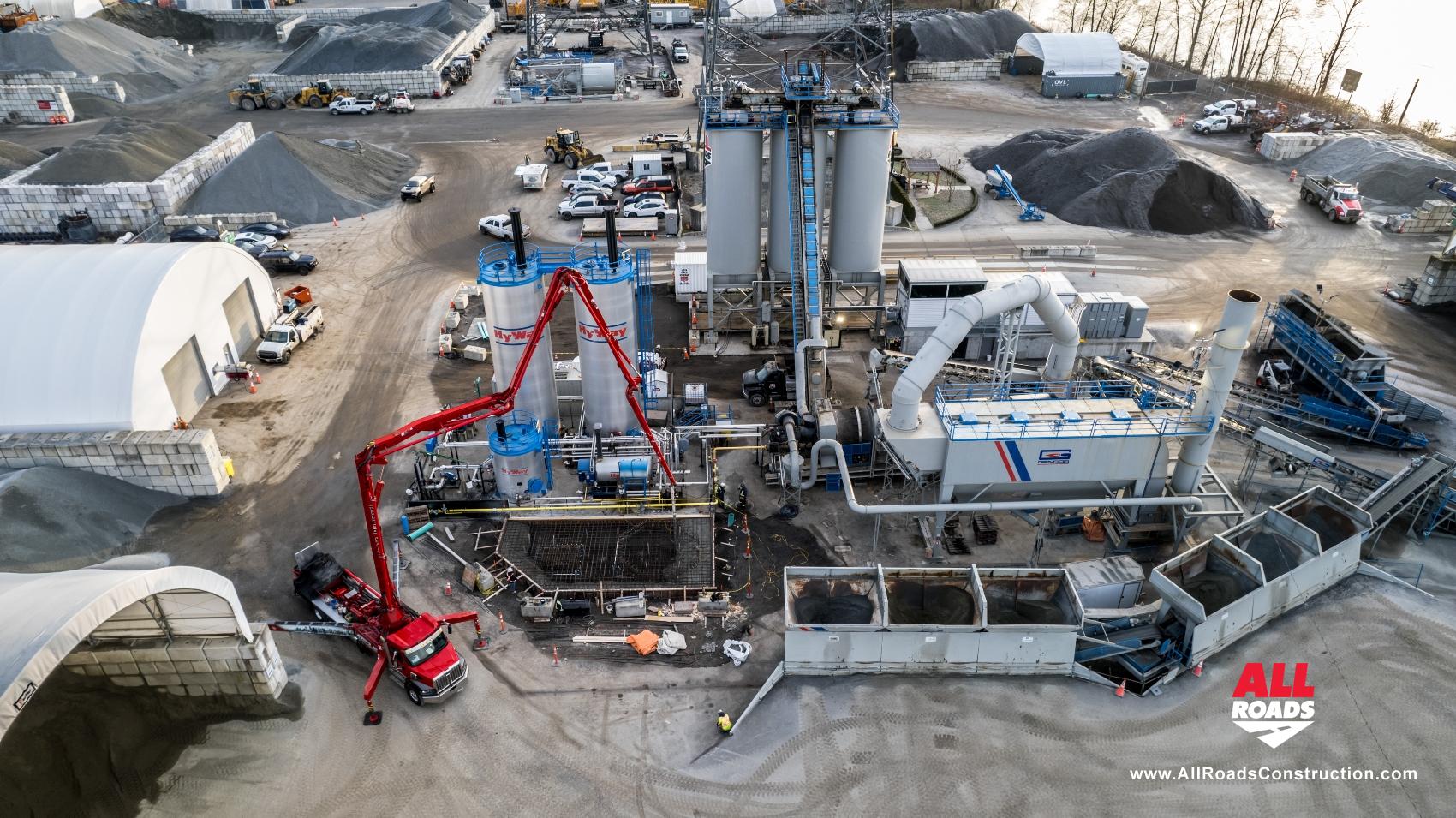
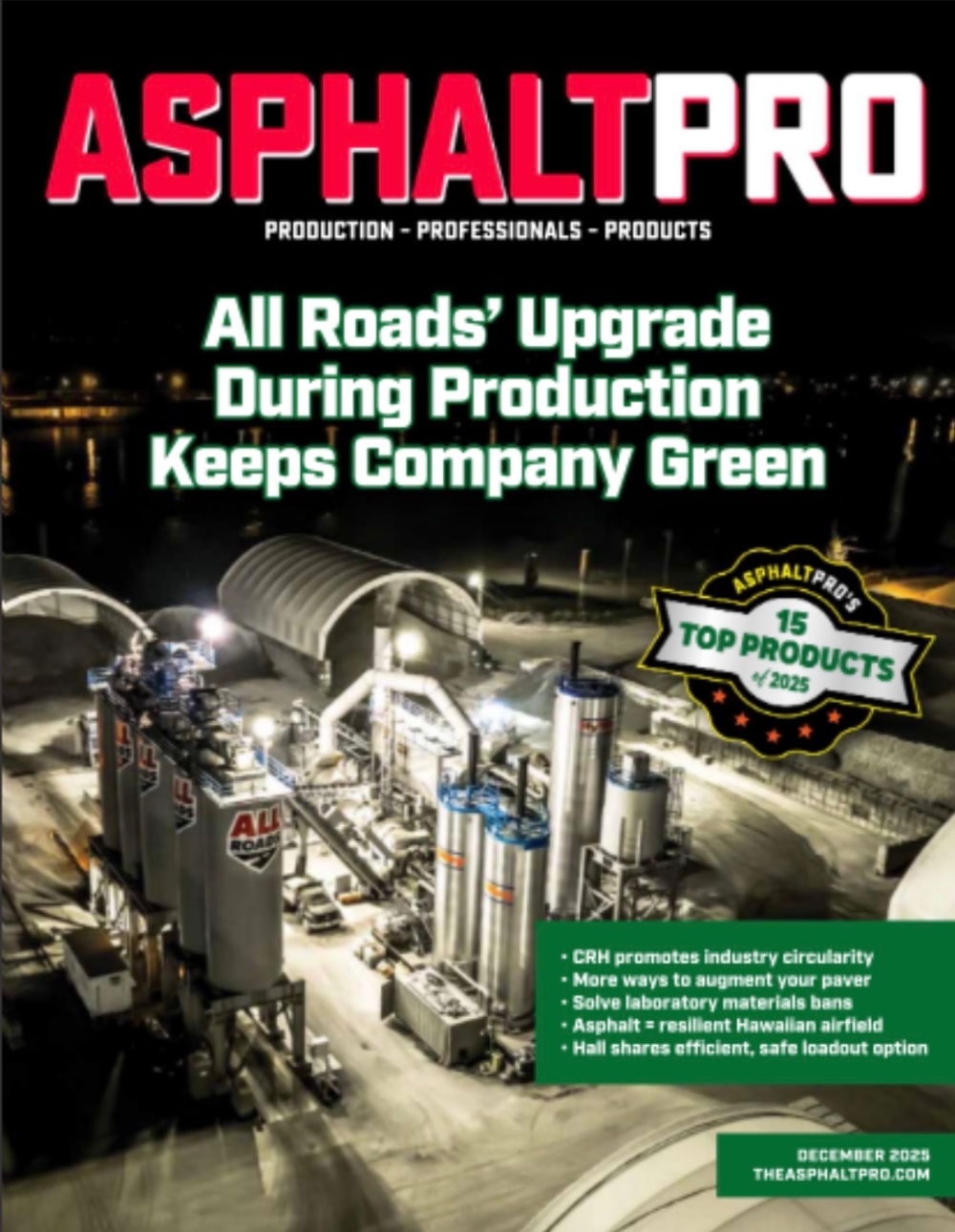
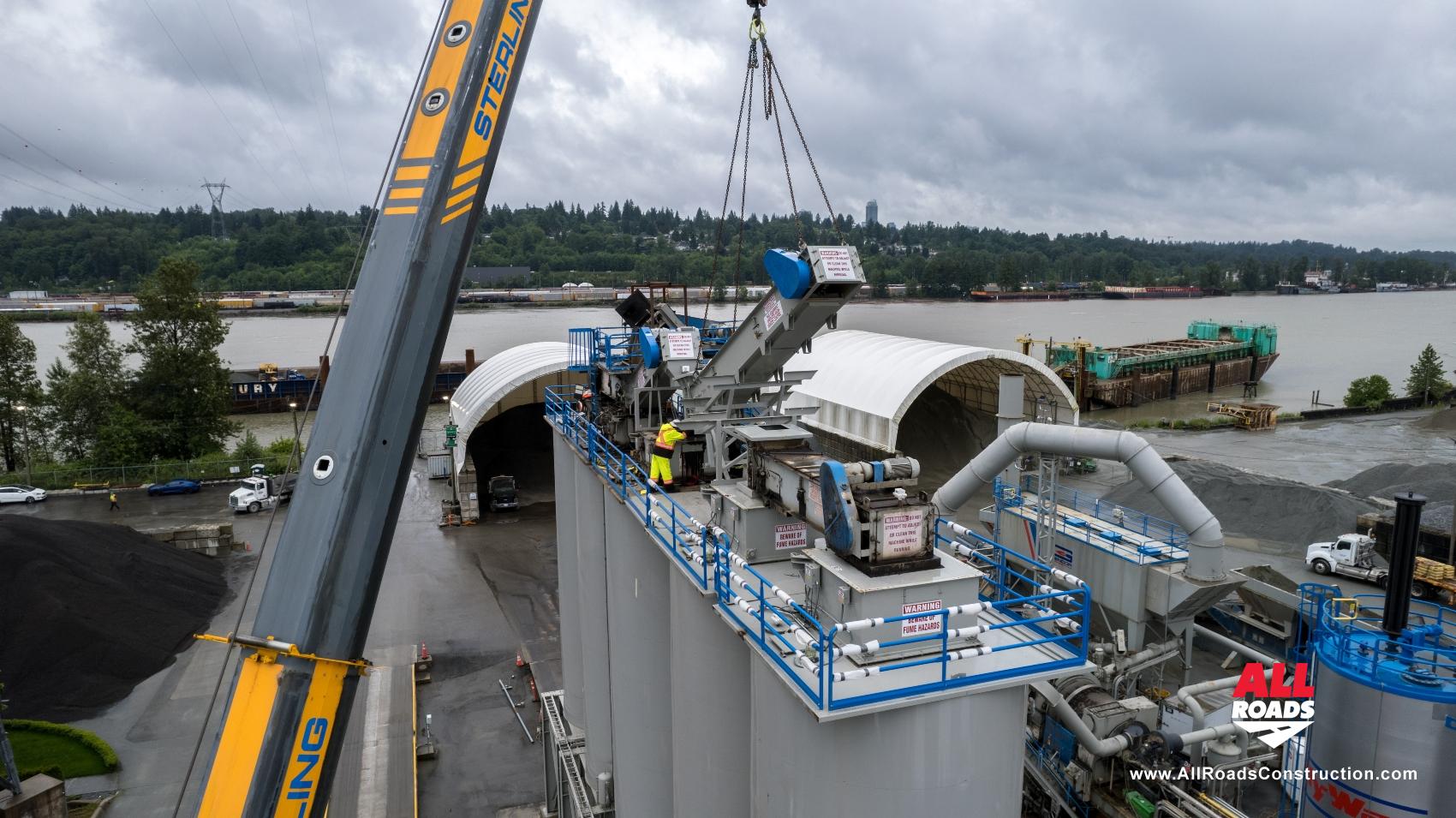
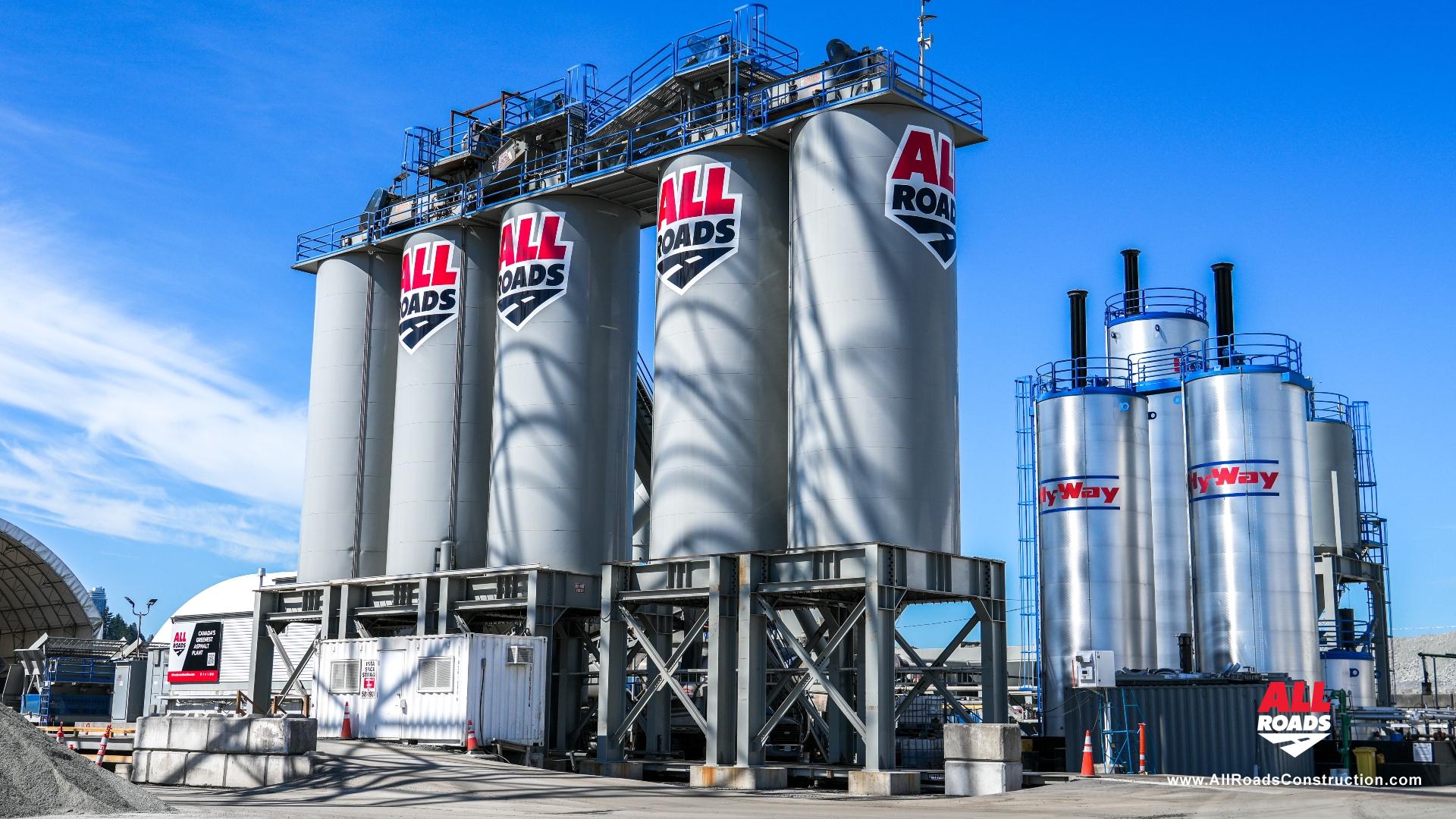
When All Roads Construction opened its asphalt plant in Vancouver, British Columbia, in 2020, it set a new local standard for efficiency and environmental performance. Now, after a major upgrade completed in spring 2025, the company has increased its storage capacity by almost 70% while maintaining full production and the same clean-air results that defined the original facility.
All Roads President and CEO Rod Stephens said the decision to expand was about staying ahead of demand while protecting what made the plant successful from the start. "We wanted to grow our capacity without losing the reliability and environmental integrity we built this operation on," he said.
The project reflects both market growth and All Roads' long-term strategy: to meet higher material demands, adapt to new mix specifications, and keep the doors open to third-party customers 24/7. From planning through installation, the expansion showcases how careful coordination, in-house expertise, and a focus on service can turn a logistical challenge into another example of continuous improvement.
Why the Expansion Happened
When All Roads Construction decided to expand its Vancouver asphalt plant, the move was driven by production realities, not speculation. "We have about 400,000 tons of Highway 1 Trans-Canada paving to do," Stephens said. "And over the last five years, our third-party sales have skyrocketed."
The dual demand of major infrastructure work combined with strong third-party growth put pressure on the plant's capacity and flexibility. "Not only were we coming up short on volume, but we also needed capacity for a broader variety of mix designs," said All Roads Plant Manager Dennis Eby.
That last point became even more important when government specifications changed to require polymer-modified asphalt in top-lift paving. The new spec meant the plant needed additional binder storage and more room to handle multiple AC products without disruption. As Stephens later explained, those evolving requirements were a key driver behind adding both new silos and a larger binder tank - ensuring All Roads could meet every mix design its customers demanded.
With more work ahead and more contractors relying on them, All Roads needed a way to produce multiple mixes at once while maintaining the customer service that helped drive that growth. "We run three plant crews so that we can run 24 hours a day and seven days a week," Stephens said, adding that the company's round-the-clock availability and commitment to customer service have been key to building customer loyalty.
Despite All Roads' need to expand, they didn't want the customer service so responsible for their growth to suffer. They needed to figure out how to expand production capacity while keeping the plant fully operational - and just as clean and efficient as the day it opened.
Building While Operating
Expanding a continuously running asphalt plant required both precision and restraint. All Roads' goal was clear: stay open, stay safe and finish on schedule.
"We started the planning process in November when we met with Gencor," Eby said, adding that they began the upgrades the following January. "Our goal from the beginning was to keep the plant open full time and accessible while these improvements happened."
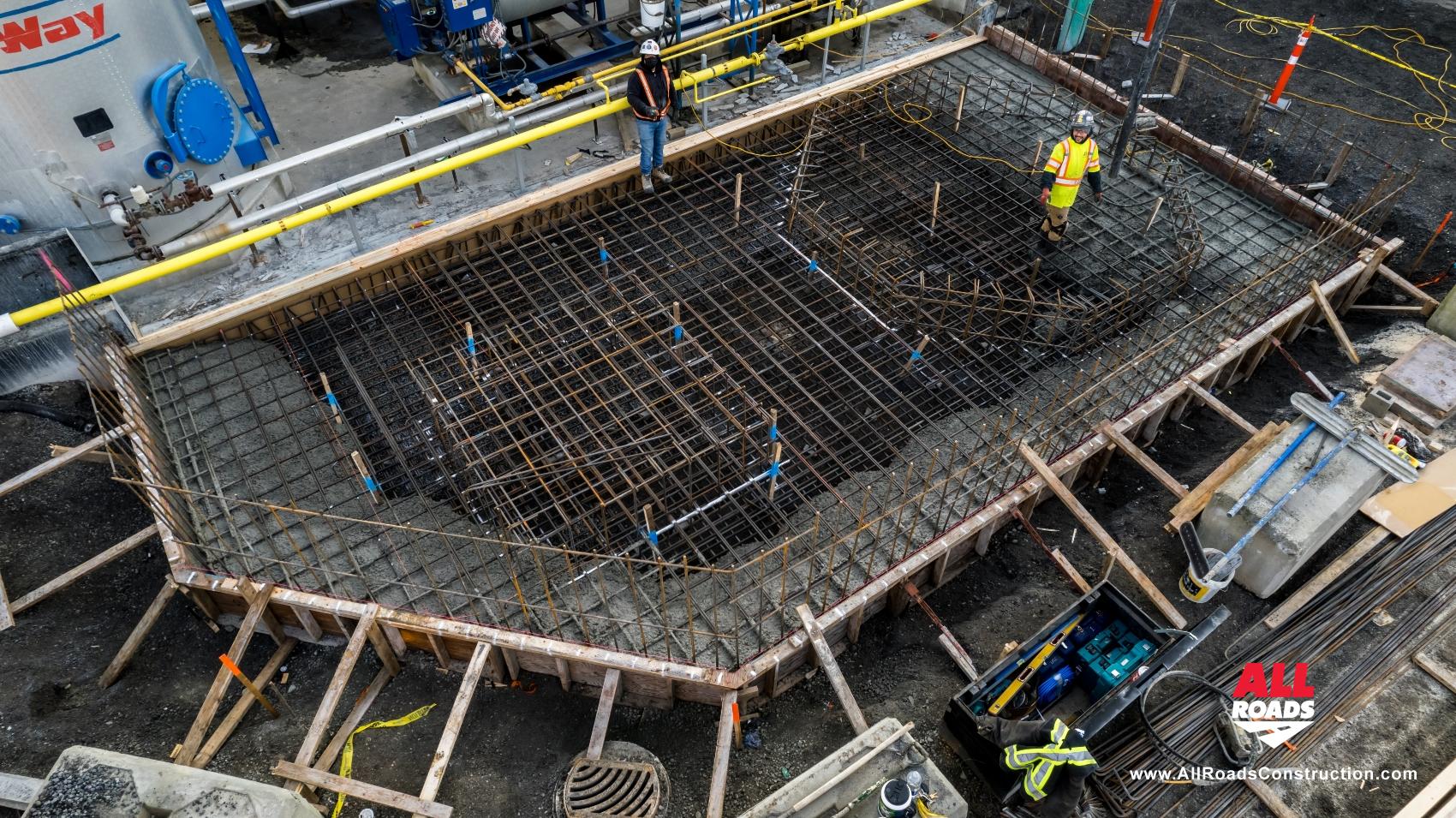
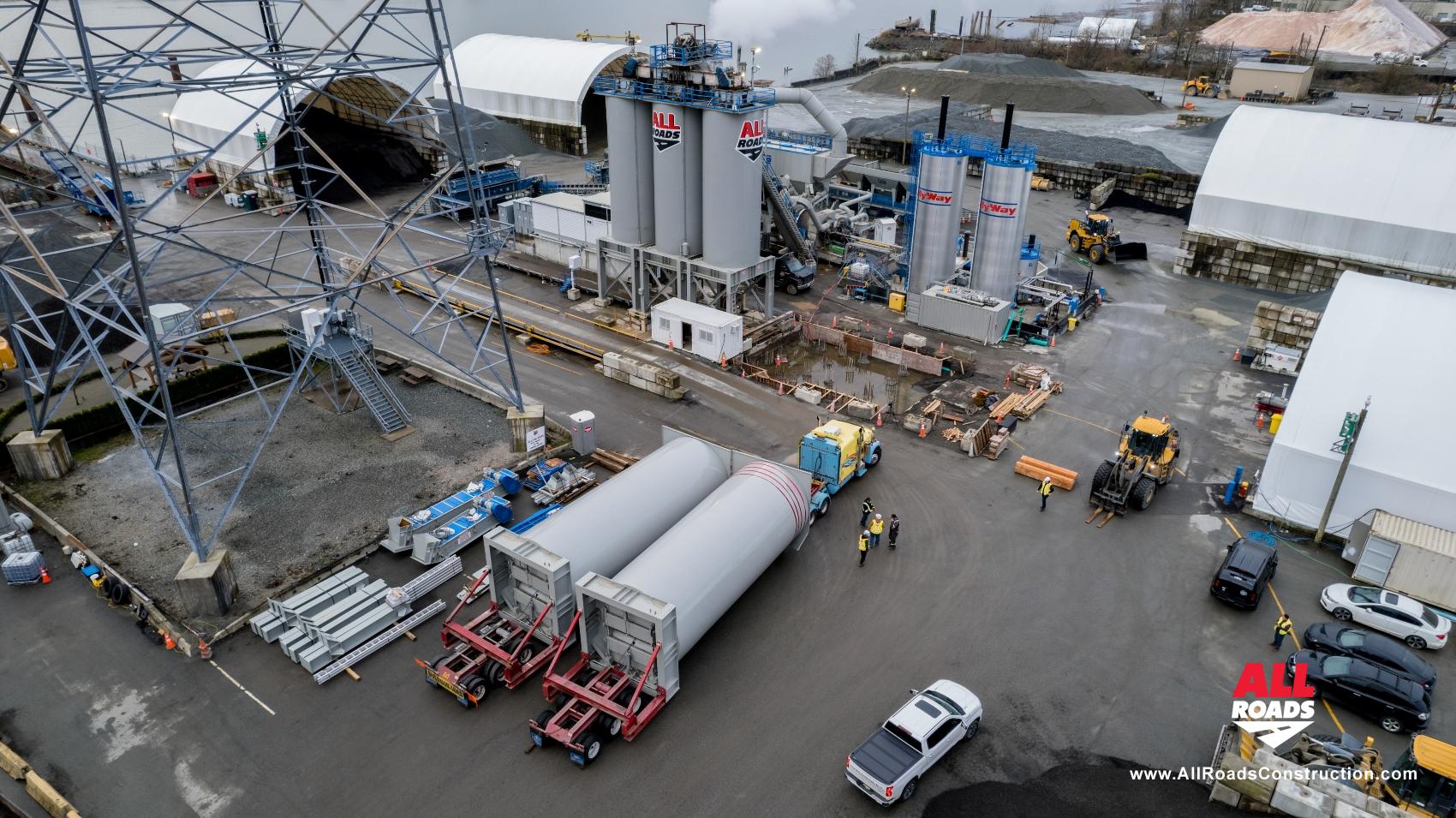
The project added two 200-ton silos and a 45,000-gallon AC binder tank, supported by 20 piles to make the new structures earthquake-resistant. "There was a lot of groundwork involved initially," Eby said. "And that all happened simultaneously while we produced asphalt."
Every bit of work from excavation to setup was handled by All Roads' own crews, without a single injury or incident.
"During construction, we made minor tweaks in the yard to ensure that our customers could be loaded in conjunction with our crews," said All Roads COO Mike Darby, who led the on-site construction work. "This included having internal and third-party sales truck lines and yard coordinators during busy times. We determined in advance that we wanted our customers to be impacted the least and typically sacrificed our own crew productions to accommodate this service orientated goal"
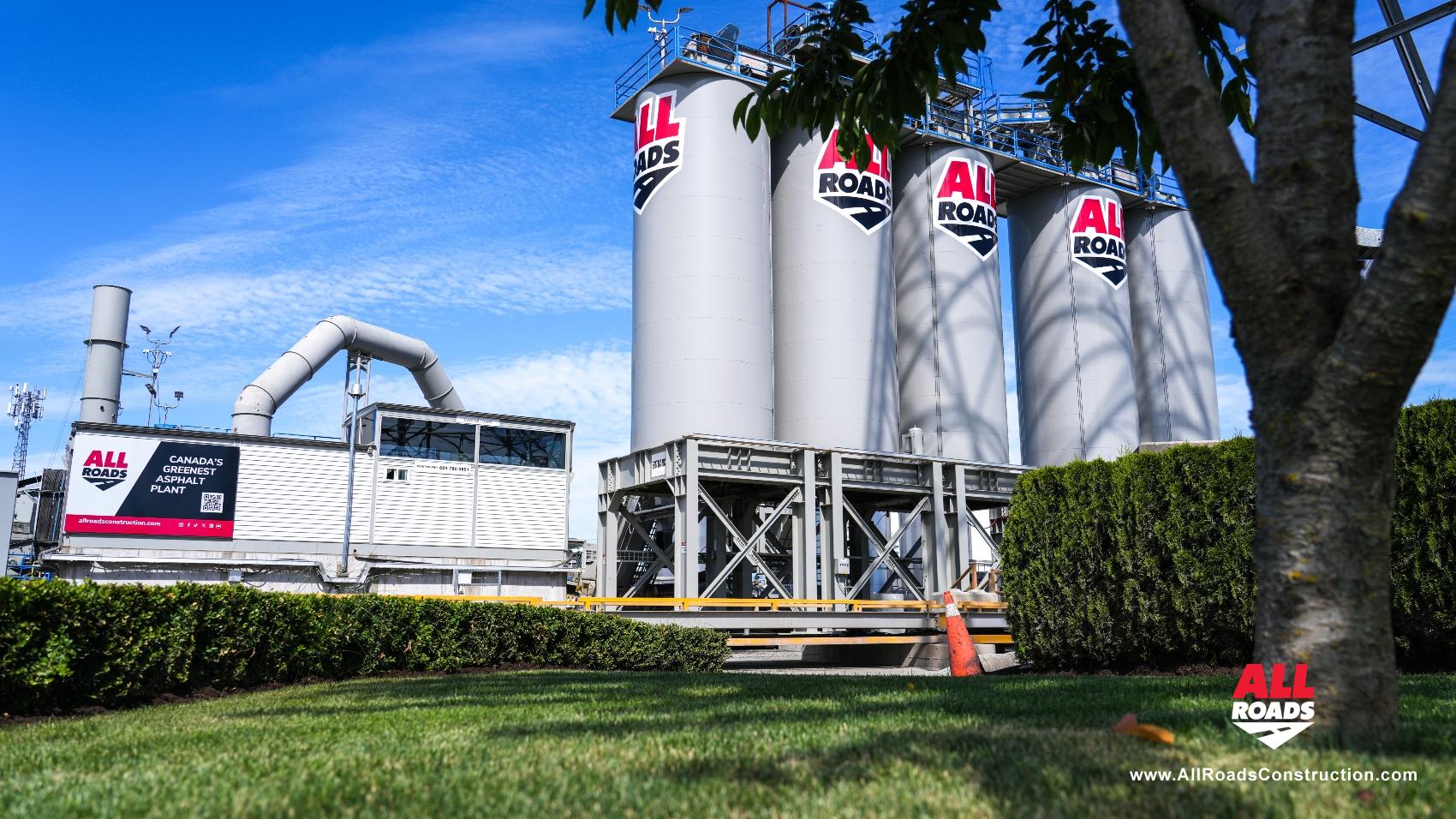
Construction wrapped up just in time for the 2025 paving season. "This is the year of fives for our asphalt plant. It's now five years in the making, with a recent upgrade to five storage silos, in the year of 2025," Darby said. Eby added, "The tank came online first in the middle of May, and then the silos were up just in time for our busy season."
A key decision early in the project ensured the plant would be ready for that surge. "I was originally just going to order one silo, not two," Stephens recalled. "But Dennis just phoned me one day and challenged me, ‘Why are you wasting time? Let's just get both going right now.' And I accepted that challenge." The choice to complete the full expansion at once proved essential to meeting production targets.
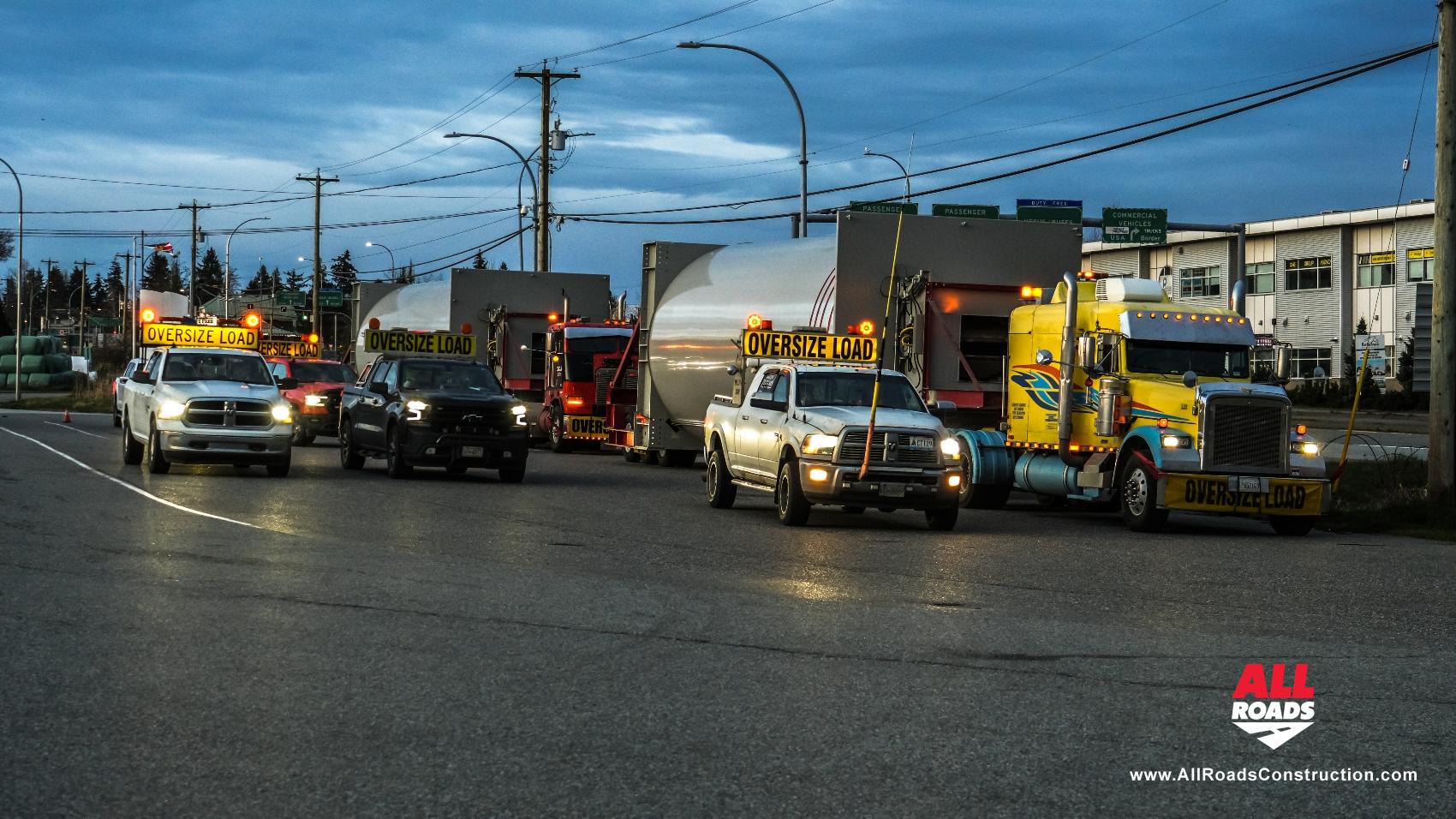
Unpredictable tariffs briefly complicated equipment delivery. "We ended up by getting two of our silos through with no tariff," Stephens said. "And then when our AC tank came through a week later, they hit us with a $75,000 tariff."
Even with that setback, the team refused to cut corners. "We wouldn't have sacrificed the sustainability performance of our tank for the sake of the $75,000," Stephens said. "We wanted the product to be consistent with everything else we have."
When the final pieces came online, All Roads had gained almost 70% more storage capacity without interrupting production - a rare feat for any continuous-run facility.
With the new infrastructure in place, the focus turned to performance: how the upgraded systems improved efficiency, environmental control, and the plant's already-strong emissions record.
Performance and Environmental Results
When the upgraded systems came online, the impact was immediate. All Roads produced more than 400,000 tons of mix in 2025 - about 15% more than the previous year - without increasing emissions or energy use.
The new silos and binder tank have streamlined production and reduced downtime between mix changes, allowing operators to keep materials hot, organized, and ready for dispatch around the clock.
"The additional silos also allowed us to fill orders for the day shift immediately after the night shift projects were complete," Darby said. "This gave us more room to better service our day shift projects and our smaller third-party customers."
Stephens said the improvements also prepared the company for the province's evolving binder requirements. "Now, nothing can stop us," Stephens said. "There's no mix we can't make."
Just as importantly, the expansion preserved the plant's environmental performance - a cornerstone of All Roads' identity. The company, which describes its facility as the greenest asphalt plant in Canada, continues to post its emissions data publicly. "Our particulate is not even a tenth of what we're allowed to be able to produce," Stephens said. "We blow the specs right out of the water and we're proud of that, so proud we post those results online."
That strong environmental record also made the permitting required for the expansion easier. "The [city] could do quick calculations to determine that with this upgrade we're still way below permitted levels," Stephens said.
Performance gains have come not only from technology, but also from experience. "It's almost like our plant is getting greener and cleaner," Stephens said. "Part of that is because our guys are actually learning the plant better… and it makes it burn more efficiently, which means we emit less."
Five years after commissioning, the Vancouver plant continues to perform cleaner and more efficiently than when it was first built - a testament to both its design and the team operating it.
That same team - the operators, maintenance staff, and managers who keep the facility running 24/7 - remains central to All Roads' success and to sustaining those performance gains.
The People Behind the Plant
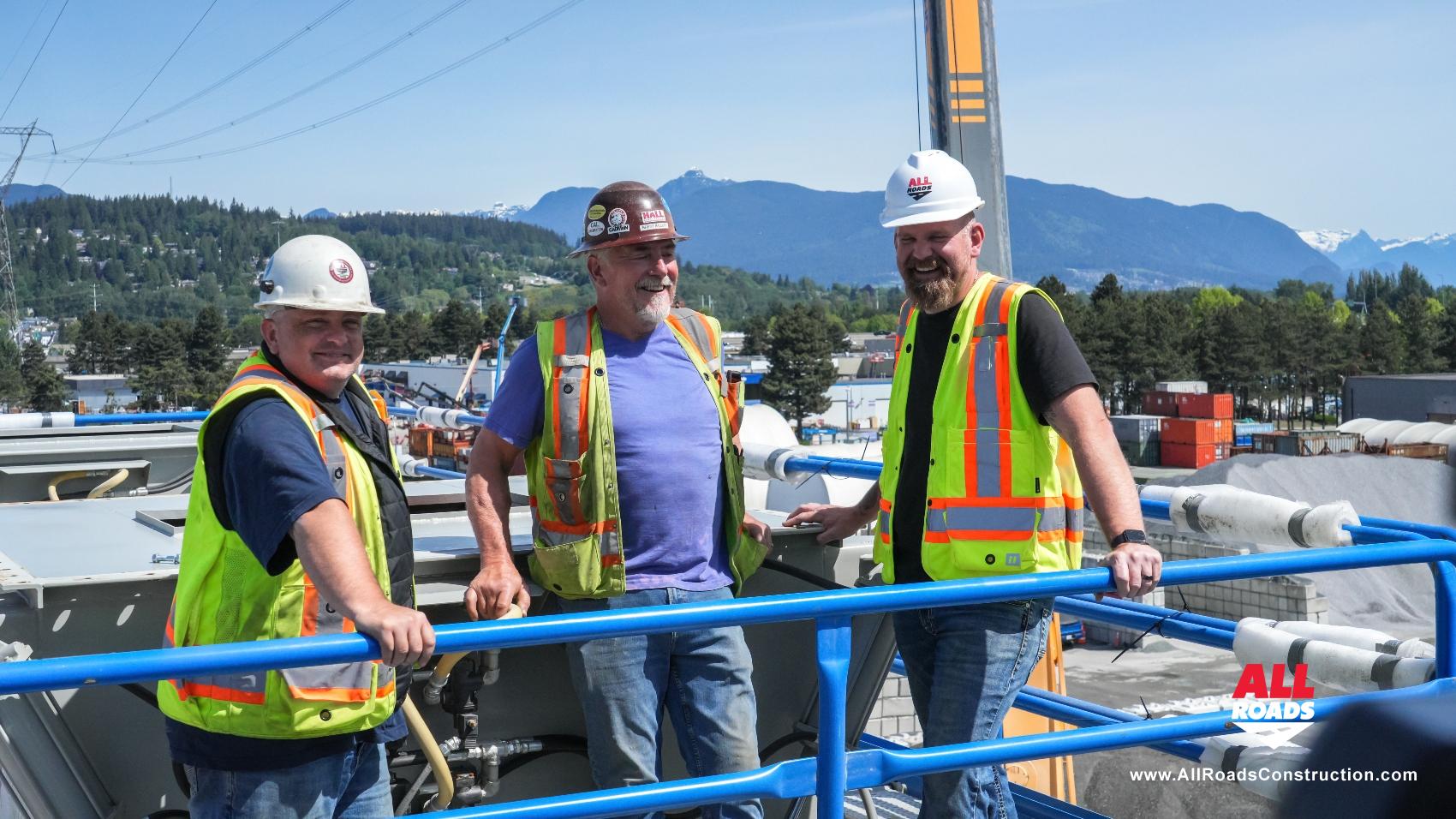
Behind All Roads Construction's around-the-clock operation is a team that keeps the plant running smoothly, safely, and continuously improving.
"We don't wait until the winter months to perform all our maintenance," Eby said. "We're constantly repairing and upgrading, and improving on the fly."
All Roads Plant Superintendent Jordan Shepell skillfully lays out all maintenance projects in advance. "If we get a rain day or a couple hours, they know how long that maintenance task is going to take and they hammer it out fast."
That responsiveness proved essential during the expansion and remains part of daily life at the Vancouver plant. Tight coordination between loadout crews and truck drivers ensures the site runs like clockwork even at peak capacity. Stephens credited the on-the-ground teamwork that allows materials and traffic to flow safely through a compact site without delay.
Investing in training has also strengthened the operation. Each year, All Roads sends plant personnel to Gencor's training facility in Florida to sharpen their technical skills and deepen their understanding of the system. "They actually light a burner and show the guys there what a perfect flame is," Stephens said. "The guys get so much out of that training. They get to understand the drum's internal flighting system and all the plant's major operating components."
That emphasis on development has given All Roads more bench strength than most single-plant operations. "We have five plant operators," Stephens said, "whereas most competitors can hardly find one."
Stephens said a culture where learning, teamwork, and respect are daily values makes the company a sought-after workplace. "When you have people reaching out to you to want to come to work for you, instead of you trying to find these people, that's a huge advantage."
That sense of pride and camaraderie runs deep. As Stephens put it, "We're here to have a lot of fun and hopefully make a little bit of money."
The Road Ahead
Five years after opening what the company calls the greenest asphalt plant in Canada, All Roads Construction continues to prove that clean operation and high production can go hand in hand.
Looking ahead, All Roads plans to document its environmental performance even more formally. "We don't have [an Environmental Product Declaration] yet, but it's on my hit list to be able to achieve in 2026."
For Stephens, that next step is part of the same philosophy that guided the expansion - continuous improvement, backed by investment in people and technology.
"Asphalt plants are necessary to service the industry and the roads we travel on," he said. "At All Roads, we're going to continue to do that in the greenest way possible."